AWE 2021
I attended, In-person, the just completed Augmented World Expo, AWE 2021 in Santa Clara California; the preeminent XR/VR/AR event and feel I have some good insights to share. This report is truly Me-centric, providing my perspective and not at all trying to be a comprehensive review but will hopefully be of interest to some.
I mention many of the announcements and sessions that I found most important. However, I don’t provide much detail. Any one of the significant announcements from the show would require an article of their own, so this just gives a clue of what you may want to investigate further.
A “Good “Metaverse”
I’ll start out (just below) by sharing how this event affected me personally. The isolation of the long pandemic lockdown. The social division and unrest that is so forward in the news. That feeling that the world has changed and maybe not for the good was surely a low grade worry I wasn’t even aware I was carrying, but it was there. I think reuniting with a new tribe at this event was just what I needed to bring some sunshine back into my outlook.
For this year’s event, AWE should stand for Awesome Women Everywhere.
For this year’s event, AWE should stand for Awesome Women Everywhere. Yes, I am a dude but no, I am not making some chauvinistic or sexist comment here. In-fact what I am trying to convey is a bigger, social, or ethical aspect that I hadn’t expected at all. This is the reason for my title saying we have a great hope for a “Good Metaverse” in our future.
Our real world today is so full of what some term “woke” ideals, which in reality all seem to focus on just being good humans or maybe just humane. Regardless, if it is a focus on diversity or inclusion or equality or caring for the planet or just some basic love and respect, it all hopes for a better future.
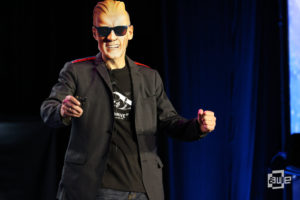
At this conference, starting with the zany, madcap (Max Headroom inspired) opening keynote by Ori Inbar (the father of AWE) and continuing throughout the event, there was an authentic “wokeness” (if you will) that was just inspiring. It feels like we really have woken up into a new day.
I am an old school (old) dude who has been around the tech industry for a very long time, notably in 3D. I attended conferences (back-in-the-day) at the Santa Clara Convention Center when it was brand new. Being somewhat engineering centric, these conferences used to be a big dude-fest. At AWE this year, Ori shared that more than ½ of the speakers were women. This was clearly not some plan to be inclusive but because they were the best persons to be speaking on their respective subjects.
Walking the halls and seeing all the various communities represented, it was just so inspiring. It gives me a hope for a “Good Metaverse”, but there is more. There were so many signs of our great new path.
Who Will Build the Metaverse, and Will it Lead to a Dystopian Future?
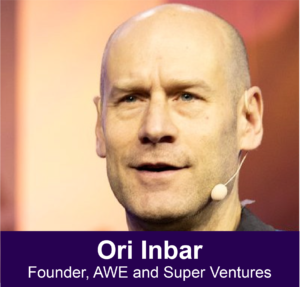 This two-point question was really a thread through the entire event. Ori addressed it in his opening keynote. Then, John Hanke (Niantic) dedicated the last ¼ of his keynote to directly addressing and rejecting the dystopian future. Another key theme, expressed nicely by Brielle Garcia in a panel discussion about the status of the Metaverse was (I paraphrase) “We are living in it now, it’s already happening.”
Looking around the conference I quickly realized, these ARE the people building the Metaverse. Of all the people on the planet, a good portion of those who will be noted in history as Metaverse pioneers (Pionerds) were at this event. The Metaverse isn’t being planned by some Meta organization. It won’t need someone to overlord and make sure it is “Good” or kidnap it for evil. We are already on a great path to a great future. We reject some dark fate for humankind and as we live our good lives each day, we are building the future we want to live in and that includes a good Metaverse.
OK, now two steps down off the soapbox.
What was the AWE Event?
The speaking sessions/tracks covered a huge variety of VR and AR subjects. The quality of the presentations was top notch in every session I was able to attend. The creator community was deeply represented. Such an incredible blend of tech and heart and talent. Surely populated by a younger tribe but such a wonderful and bright light shining on our future. Alongside the artistic creatives we had, for instance, a session delivering a deep-geek hardware presentation delving into the specs of a waveguide lens. You should be getting a feel for the breadth of topics. I even found some of my old tribe of construction site technologists showing videos of guys getting mud on their boots while traversing an early phase commercial building site wearing a HoloLens painting the scene in precise AR content.
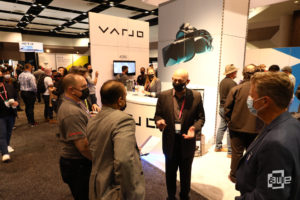
The exhibit show floor was a lot bigger than I expected and I had several reasons to think it would be smaller. First, this a tightly focused market space in some respects. We are also still coming out of a state of pandemic uncertainty where 6 months ago when you had to start planning to attend, as an exhibitor, it was kind of impossible.
Not just the size of the show floor but the diversity of exhibitors helped me realize, this is sort of the “Maker” event for the Metaverse. Yeah, Niantic was the big 40 x 40 booth when you first walked in so end user consumer apps were represented. However, they were surely more focused on the newly announced Lightship as a tool provider for building the AR part of the Metaverse. Right across the aisle was a 10×10 both with a company who provides lens coatings for glasses manufactures. Kitty corner to them was a haptic glove maker. Just such a wide array of the base components of the Metaverse.
On my personal quest for valuable new tech, I found a software library provider, ReSight out of Tel Aviv, that has a world-scale spatial positioning solution that might solve some of my orgs critical path problems.
There was also a big playground area with dimmed lights and lots of corrals where you could play with various VR headsets, robot reality-capture dogs, volumetric capture rigs and the AR House chill area. I went over there several times to watch players swatting at the air and slaying dragons or armored horses with virtual broad swords or small axes.
Some Other Show Pieces
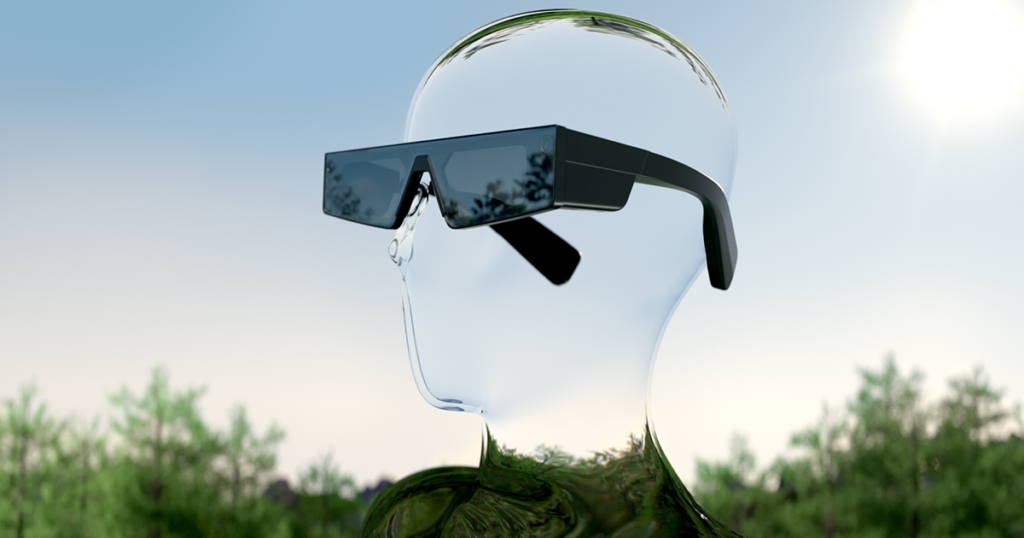
 The show provided pretty good amenities. You could find a coffee service when needed. The evening happy hours had some finger foods and cash bar. The Auggie awards were well attended where the Next Generation Snap Spectacles won a well-deserved “Best Headworn Device” award. That is a big accomplishment considering all the great emerging solutions. IMHO Spectacles have a great form factor, great vivid display. Not perfect but surely one of the better releases of the year (should say limited release but will surely come public in some state soon).
There was an offsite Auggie awards after party at the Glass House in San Jose, but I didn’t make that so can’t comment.
My Favorites
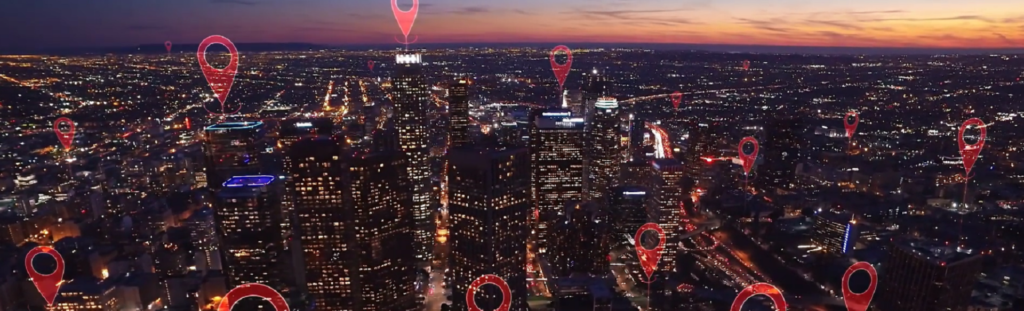
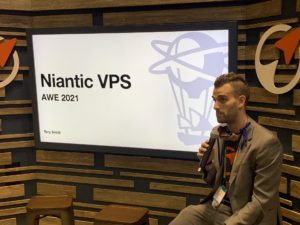 I mentioned Ori’s opening, great keynote which was followed by John Hanke’s (Niantic) keynote. It was a real tone setter for the event. The Lightship ARDK announcement was well received as well. I was most interested in the VPS (Visual Positioning System), think replace/augment GPS. It could be a great resource for me once it has mapped a good chunk of the world. It is kind of a future thing also, but soon they said. I tried drilling down with some of the tech management who were at the show. I have enterprise needs and ideas, but they seemed to be tightly focused (and reasonably so) on their community of users and a crowd-source scenario before considering any business and tech adaptation to the enterprise.
Cathy Hackel’s Shaping the Metaverse was a must-see session. Each panelist brought unique perspectives and insights on pretty much all the key topics like “What is the Metaverse?”, “When will it happen?”, “What about NFT’s or Crypto”, etc.
I posted about this before but will reiterate this here as it was a real lightbulb moment for me. In the discussion about NFTs, Dirk Lueth, founder Upland (I’m an Uplander and almost Pro) gave me some new insights. He spoke about NFTs, in the future, being our identity ownership. Like in our real world the car we drive and the shoes we wear are owned items that, admit it or not, are part of our identity. Therefore, in the Metaverse, using blockchain (NFTs) will allow us to replicate those identity embellishments and accessories with a similar ‘acquire and own’ concept. Of course, the flexibility in the Metaverse immediately causes brain-explode if you really think about it, but maybe later for that.

Session: The Future of Art and Creation: Interactive Art and Games in AR
- Featured a panel of sort of Snap centric, super talented creators
- Representing Bad Chick Studios, a guy who hangs at AR House (in L.A.), and Streem amongst others. All top notch.
- Really cool insights. “Put a smiling face on things. It engages people. If an object just smiled at them and then my app crashes, they would boot it back up.” Brilliant!
Session: Usability in Wonderland: Advanced UX Standards for Spatial Computing and Virtual Worlds. Nicole Lazzaro
- I’ve been following her for a while in places (not like stalking). This subject wouldn’t be top of mind for me, but I wanted to see what she had to share.
- Beyond insightful. I hung on every word and concept. So many of the sessions showed a real dedication to the work, deep prep and passion translated into valuable guidance. This session exemplified that.
- No more mouse pointer or windows, and a fresh and well though out way to facilitate deep engagement.
Session: Stereoscopic AR in WebXR
- Some folks from MetaVRse and I “Think” backed up by Denali Advanced Integration (I hope I got this right) showed LIVE, 4 people with VR headsets all in a multiuser shared space all driven by WebXR. The excitement in the room really did make it feel like a historic event. “I was there when…” The new Kitty Hawk. They only flew for a few seconds, but we will be talking about it forever. Ha. At least it seemed like that to me.
I could never do justice to the sessions I attended that covered way more than I can discuss here. Financing, hardware, security, privacy, etc. With 5 or 6 simultaneous sessions, starting every 30-45 minutes, over 3 full days with over 300 speakers, the information was mega for sure. The conference was a clear inflection point for me, personally and professionally.
I came away inspired and refreshed and somewhat in awe of where we are headed and the people helping us get there. I am dedicated to building my little piece of the future and have a renewed energy and clarity of focus after this time together. I seem to end every article with this sentiment, but lets get to work building this great future.

 client. Then capitalize on the market buzz of AR glasses as they take off. Honestly, even in the time it took to pen this piece I started losing focus on that. The business issues of hiring sales guys, making a monthly target, it all starts to blur the focus. I need to keep a sharp eye on product. A product that can deliver to my target customer.